Klara’s old store
Klara and the SunKlara’s old store is the Artificial Friend shop where Klara worked before being chosen by Josie’s family. It is both the setting of her early life and a changing retail space: once a window display for AFs, it later becomes a shop selling recessed lighting. Its altered storefront marks the passage from Klara’s place among goods for sale to the uncertainty of a world that has moved on without her.
The Store as a Retail Display
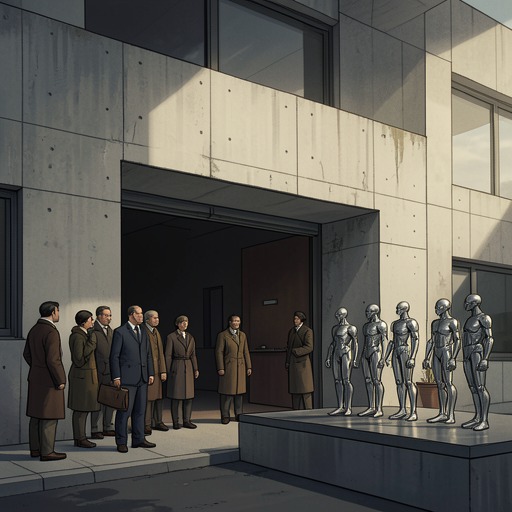
The store presents AFs as models to be assessed and matched with children. During one prospective customer’s visit, the Manager identifies Rex as a third-series B2 and recommends him as a companion likely to encourage a conscientious, studious attitude. The Mother points out that third-series AFs have had solar-absorption problems; the Manager acknowledges early issues but says the reports were exaggerated and that ordinary light presents no problem. The exchange exposes the commercial tension between a model’s sales pitch and a buyer’s concern about its defects.
Klara’s own interruption in a later selection encounter shows that she understands herself as part of this system of choice. She apologizes to the Manager and says she thought she might not be the best choice for a particular child. The Manager eventually agrees that the girl would be happy with the B3 boy, while admitting that Klara’s intervention surprised her. In this way, the store is not merely a backdrop: its everyday business of matching children with AFs becomes the context in which Klara judges her own suitability and acts against the expected course of a sale.
The shop’s display changes as new stock arrives. Three B3 boys are calibrated and placed in prominent positions: two in the window beside a large new sign, and one in the front alcove. A fourth B3 has already been bought by the spiky-haired girl without being seen by the other AFs. Klara and Rosa are moved to the Red Shelves side after their turn in the window ends. The new models reorganize the shop’s visual hierarchy, making product placement—and the arrival of newer series—part of the AFs’ daily environment.
A Place of Selection and Departure
The store’s assurances about location and visibility are tested by Rosa’s sale. The Manager has told the AFs that every position is a good one and that an AF in the middle of the store is as likely to be chosen as one in the window or front alcove. Rosa, still placed mid-store, is bought. Her departure happens on an otherwise ordinary day: nothing about the taxis, passers-by, window grid, or the Manager’s greeting signals what is about to happen. Once the Manager confirms the sale, Rosa is taken behind the Staff Only Door to prepare for shipping.
The speed of Rosa’s departure interrupts the companionship the store had made possible. Klara had assumed they would have time to talk before either left, and had hoped to remind Rosa of what the Manager had taught them about being a good AF. Instead, Rosa’s excitement makes a serious conversation impossible. The store thus joins two different meanings of selection: it gives AFs the prospect of being chosen, but the transaction can remove a friend from the shared space before farewells or advice have been fully exchanged.
The shop also remains part of Josie’s family’s neighborhood. When Josie’s mother proposes an interaction meeting, Josie objects that the visiting children are not her friends and insists that Rick be included. Her mother agrees, describing Rick as a good person and their neighbor. The scene places the store within a wider social map of family, neighbors, and children; the AF shop is one of the local spaces against which Josie’s relationships and choices take shape.
The Store After Klara Leaves
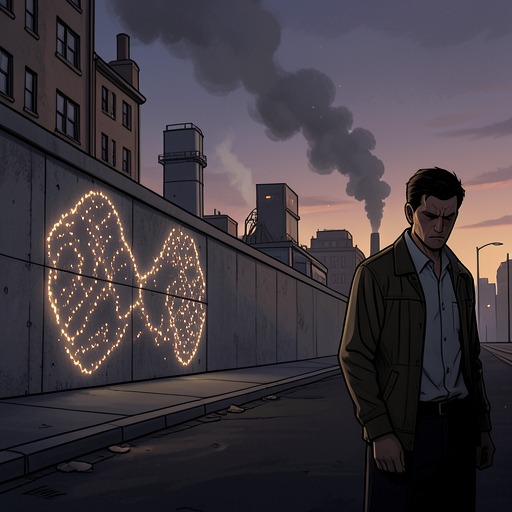
Much later, while riding through the district with Josie’s family, Klara recognizes the familiar RPO Building and taxis. She expects the view to orient her, but the store’s frontage is unrecognizable: there are no AFs or Striped Sofa in the window. Instead, colored bottles and a sign for “Recessed Lighting” occupy the display. Josie realizes that the old shop may have moved on. The change is specific and material—the former AF display has been replaced—rather than an abstract report that the business has closed or relocated.
The storefront’s new appearance unsettles Klara enough to distract her from the surroundings she would normally observe. She has not checked whether the birds are perched on the traffic signal before the car has passed the pedestrian crossing. The RPO Building recedes through the rear windshield as the family moves into another part of the street. In the same journey, Josie recalls that when she first came looking for Klara, she feared the store might be gone, along with Klara and all her friends. The later encounter gives that earlier fear a visible counterpart, even though it does not establish exactly what became of the former shop or its AFs.
The old location remains useful to Klara as a point of reference. On a drive with the Father, she passes a Nail Boutique and peeling poster walls while trying to identify the district in which Josie says the store once stood. Later, as they search for the Cootings Machine, Klara recognizes the RPO Building, the Fire Escapes Building, the store itself, and the Recessed Lighting display. The familiar landmarks help her navigate, but the storefront no longer serves its former purpose; she is passing a memory of the place while pursuing a different objective.
Memory, Objects, and Obsolescence
The store’s transformation belongs to a broader pattern of changing objects and uses. In the Yard, Klara first sees disorder in machinery with severed cables and dented grille panels, then comes to recognize the careful rows and passages the yardmen have arranged. Her description distinguishes a thing’s damaged, untidy appearance from the order imposed on it by those who sort and position it. The replaced storefront and the machinery in the Yard are different cases, but together they frame a world in which objects are displayed, used, displaced, and reorganized.
For Klara, the store is also a memory with a physical address. Her later recollections can blend scenes, but she remains able to distinguish one memory from another and place each in its proper context. The old shop’s recognizable district and its changed frontage make that distinction tangible: she knows where she is, yet what she finds there is not the place as she remembers it. The gap between the former AF window and the lighting display captures the shop’s significance in her story. It was where she belonged among other AFs and where children came to choose companions; after she leaves, its changed use makes the market’s capacity to replace its displays—and to continue without her—plain.